
Criminal Cases in the Monroe County Courts
Monroe County criminal cases share one clerk but not one court level. Monroe Circuit Court hears indicted felonies, felony pleas and trials, sentences, and matters within its appellate jurisdiction. Monroe District Court handles misdemeanors, violations, traffic charges, and the first stages of felony proceedings. Both are part of Kentucky's 40th Judicial Circuit and 40th Judicial District. Both use the Monroe County Justice Center in Tompkinsville.
The Office of Circuit Court Clerk keeps the criminal case files for both courts. Kentucky does not have a separate city municipal-court layer, so a Tompkinsville ordinance or misdemeanor matter also routes to District Court. The Monroe County officials directory lists other elected offices, but the separately elected County Clerk does not hold these court files. A common case format includes a two-digit year, a category, and a sequence. A Circuit criminal case may use a CR category, while District matters can use M or another category. A police report number is not a court case number.
Monroe County Case Levels Split
A felony may leave records in two Monroe County courts. The complaint, first appearance, bond work, and preliminary hearing can begin in District Court. If a grand jury returns an indictment, the felony proceeds in Circuit Court under a separate case record. A misdemeanor normally stays in District Court. This split explains why one name and event can be tied to more than one court number.
| Monroe court | Main criminal role | Record clue |
|---|---|---|
| District Court | Misdemeanors, violations, traffic, and felony preliminary steps | Complaint, first appearance, bond, preliminary hearing |
| Circuit Court | Indicted felonies, pleas, trials, judgments, and sentences | Indictment, motions, plea or verdict, sentencing order |
| Appellate courts | Appeals from covered trial-court rulings | Separate appellate number and record |
Ask the clerk to check both levels when a felony began in District Court. The court file, rather than the first arrest label, shows which charge was filed and how each count ended.
How to Search Case Records
The dependable public route for Monroe County case records is the local clerk. Call or visit the Office of Circuit Court Clerk at 300 North Main Street, Tompkinsville, Kentucky 42167. The published phone is 270-487-5480, and counter hours are 8 a.m. to 4 p.m. on weekdays. The official county-court page instructs the public to call or visit for case records. Have enough detail to separate people with similar names.
- Decide whether the matter is a District misdemeanor or preliminary felony file, or a Circuit felony file.
- Give the clerk the case number. If it is unknown, provide the defendant name, approximate year, and likely court level.
- Ask for the register or docket, the charge and disposition for each count, and the judgment or sentencing order.
- State whether a plain copy or certified copy is needed. Monroe County has not published local copy or certification fees, so request an estimate.
- If the file is off-site, obtain both its case number and file-locator number before using the state records-facility channel.
Cash, check, and money order are published payment methods at the Justice Center, and ePay is linked for eligible court obligations. Those options do not establish an unpublished copy fee. Confirm the amount and payment method with the clerk before ordering.
CourtNet Access for Monroe Cases
CourtNet 2.0 contains public case information from all 120 Kentucky counties. It is not a free anonymous portal for a complete Monroe County trial-case search. Broad access is subscription-based or limited to qualified users. Public “Find a Court Date” results are useful for calendars, but a hearing listing is not the full docket, disposition, or judgment.
The official CourtNet access page shows why the clerk remains essential for a general-public search. Exact labels inside a licensed interface must be checked there, but Kentucky case conventions and the official access description support the following lookup details.
| Lookup detail | Type | Required | Use |
|---|---|---|---|
| Case number | Text | No, if another identifier works | Best match for a known Monroe file |
| Party name | Text | No | Use legal name and known identity details |
| County and court division | Selection | Search-dependent | Narrow to Monroe District or Circuit Court |
| Filing year or date | Date or year | No | Separates similar names and repeat case categories |
| Party identifiers | Licensed-field dependent | No | Confirm inside authorized CourtNet access |
The official CourtNet information page supplied the captured image below. It reinforces the difference between statewide case information and custody or arrest records.
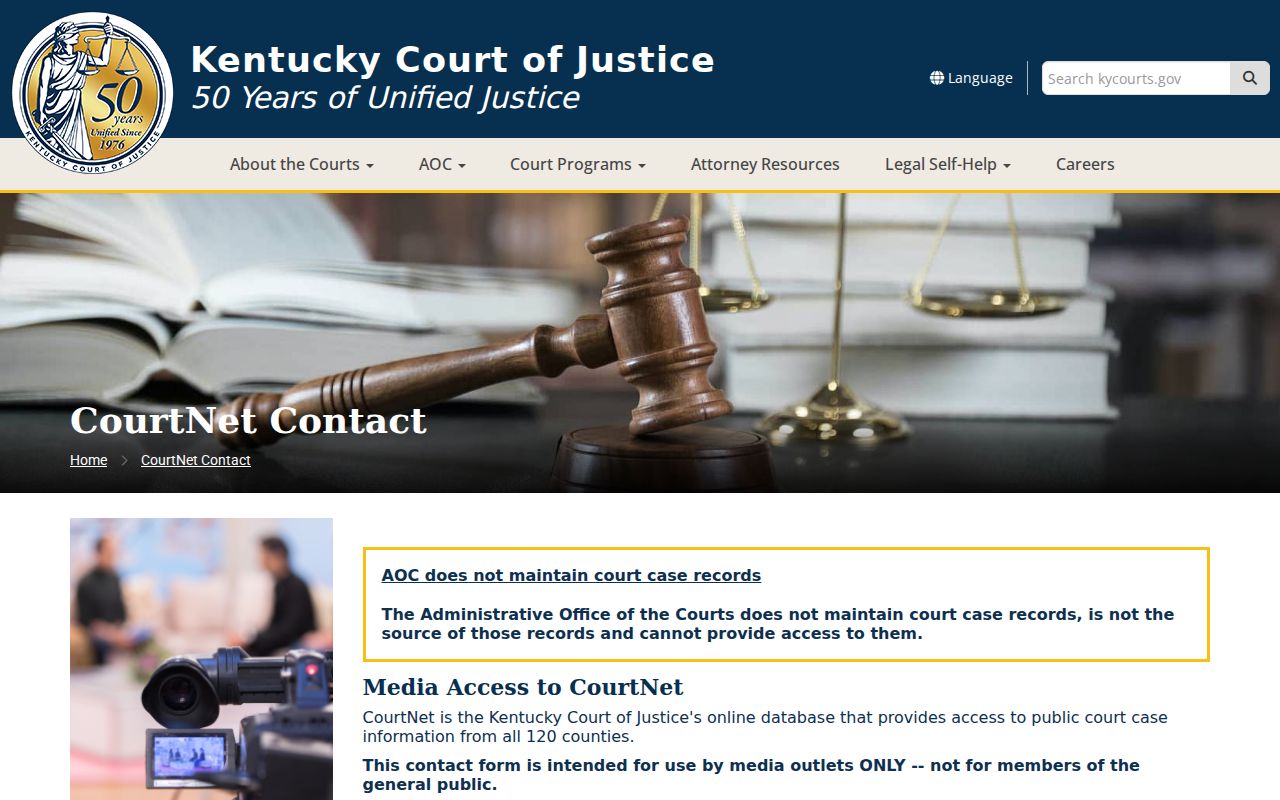
Use CourtNet for its stated court-data scope. Use the Monroe County clerk for the actual local file and certified documents.
What the Case File Shows
A Monroe County criminal case file follows the prosecution rather than the jail intake. It can show the formal complaint or indictment, each filed charge, court events, and the result. The docket is a dated event list. The judgment and sentencing order carry more weight than a booking label when the question is what the court decided.
| Case Number & Court | Identifies the filing year, category, sequence, Monroe court, and division. |
|---|---|
| Charging Document | Shows the complaint or indictment, counts, offense descriptions, and Kentucky statute citations. |
| Docket Entries | Lists filings, hearings, motions, orders, counsel appearances, and other public events. |
| Hearing Dates | Records scheduled or completed proceedings; calendar information alone may not show the outcome. |
| Disposition & Judgment | States how each charge ended, such as conviction, dismissal, or acquittal. |
| Sentence & Conditions | Shows the court's sentence, probation or revocation entries, and public financial obligations where available. |
Protected identifiers, victim or minor information, and restricted material may be redacted. Grand-jury deliberations are secret even though a filed indictment is normally part of the public case unless another rule restricts it.
Reading Monroe County Case Outcomes
“Disposed” means the Monroe County case ended at that court level. It does not mean the defendant was convicted. Each count can have a different result. A charge may be amended, dismissed, resolved by plea, tried to a verdict, or affected by diversion. The correct reading follows the count from the filed charge to its disposition and then to any judgment and sentence.
- Disposition
- The outcome of a charge, such as conviction, dismissal, or acquittal.
- Nolle prosequi
- A prosecutor's formal decision not to proceed with a charge at that time.
- Indictment
- A grand jury's felony accusation. It is not proof of guilt.
- Docket
- The dated list of events and filings in the court case.
- Expungement
- Statutory removal of a qualifying record from ordinary public systems after the required process.
A related arrest can be read beside the Monroe County arrest history channels, but the clerk's final disposition resolves what happened in court.
Stages of a Criminal Case
A Monroe County criminal case can start with a citation or arrest and a District Court complaint. A person in custody receives prompt judicial review and a first appearance, with bond and release conditions entered when applicable. Misdemeanors stay in District Court. A felony may move from District preliminary proceedings to Circuit Court after indictment, where arraignment, motions, plea work, trial, judgment, and sentencing become part of the Circuit file.
Case flow: Charges Filed › Arraignment › Pretrial › Plea or Trial › Disposition › Sentencing
The arrest-time allegation, complaint, indictment count, amended count, and conviction count may differ. Read each stage. A later appeal creates its own number and record in the Kentucky appellate system.
Monroe County Archived Case Files
An old Monroe County case may no longer sit at the Justice Center counter. Kentucky's court-record instructions explain that a file can remain with the clerk, move to a state records facility, or be destroyed under the judicial retention schedule. A missing local file or online result does not establish that no case once existed.
Start with the clerk. If the file was transferred, ask for the case number and the separate file-locator number. Then follow the Kentucky Request Court Records process. The state records contact listed by the judiciary is state.records@ky.gov and 502-564-3617. The clerk must first identify the file, since the state facility cannot reliably work from a vague name alone.
The Kentucky expungement guidance is the source for the next captured view.
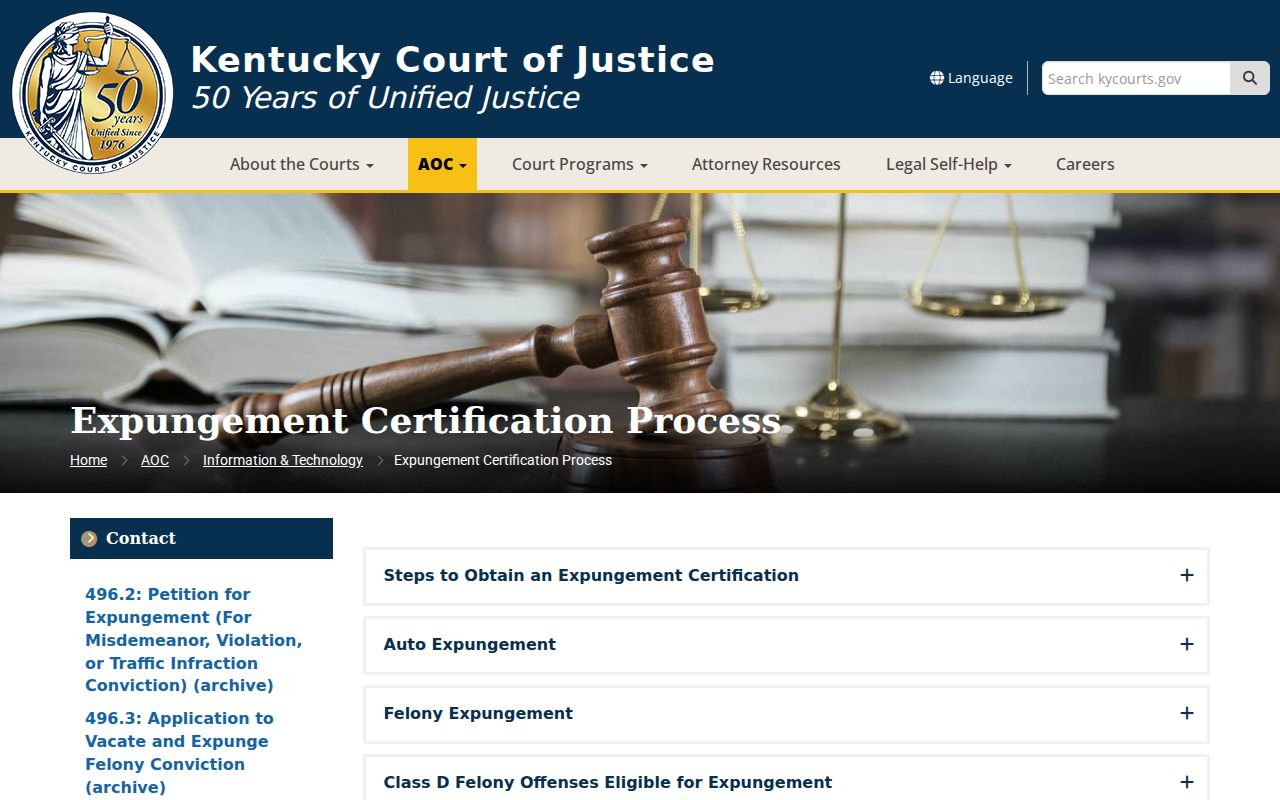
Expungement can change the clerk's public response, so a no-result search must be read with the rules for restricted and cleared cases in mind.
Access & Restrictions
Public Monroe County court records are requested from the Circuit Court Clerk, not through an executive-branch Open Records Act request sent to AOC. The official Monroe County government directory helps distinguish county offices, but AOC states that it is not the custodian of county case files. The clerk can explain what public docket entries and documents are available, what copy method applies, and whether the file is stored off-site.
Access has legal limits. Juvenile matters use special rules. Expunged or sealed records do not appear like ordinary adult cases. Protected victim information, Social Security numbers, account numbers, minor-identifying facts, and some warrant material may be withheld or redacted. Under the Kentucky Open Records Act, law-enforcement agencies can also protect covered active investigative material, but those executive-branch rules are distinct from the judiciary's case-record procedure.
Monroe County DUI Case Context
The Kentucky Court of Justice's calendar-year 2025 DUI report lists seven Monroe Circuit Court DUI charges across seven cases. That is a filed-charge count drawn from CourtNet. It is not seven convictions, a count of every local DUI arrest, or a full measure of crime in Monroe County. District cases and other case outcomes cannot be inferred from that one Circuit row.
The statistic is useful because it shows how court data should be labeled. Count the item the source measures. Then check the docket and disposition before describing any result. A charge-level report can show filing activity, while only the court file explains whether a count was amended, dismissed, tried, or resolved by plea.
The Kentucky legal forms catalog supplied the final Monroe County case-record image.
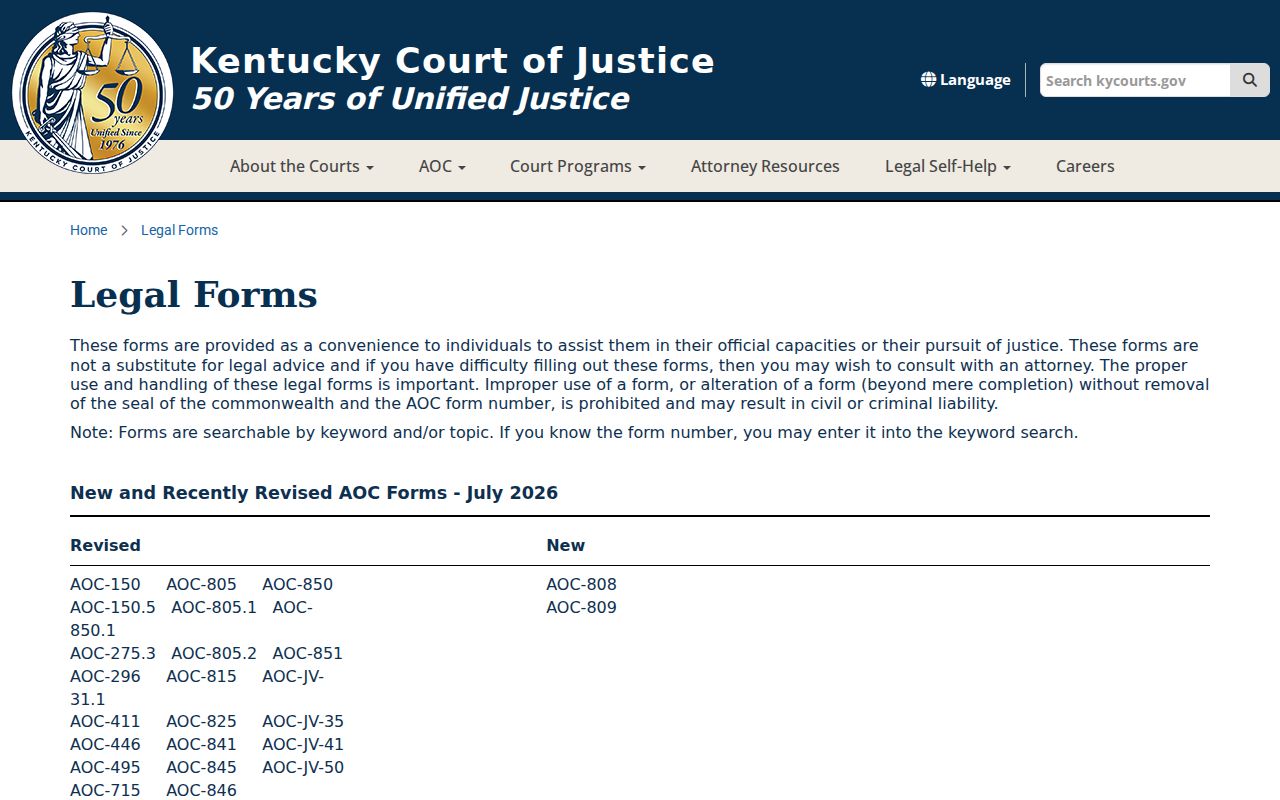
The catalog helps locate official record and expungement forms, while the Monroe County clerk remains the source for a specific trial-court file.